
Oil Painting Dog Portraits: A Complete Guide
An oil-painting dog portrait reads as commissioned art: visible brushwork, deep color, and layered texture that gives the image weight. It suits thick or glossy coats especially well and is the usual choice for heirloom pieces. It needs a sharper source photo than watercolor does.

Of all the ways to turn a dog into art, oil is the one that looks like it cost a fortune. It carries weight — deep color, visible brushwork, a surface that seems to catch the light. The result feels less like a print and more like something a gallery would hang. That richness and gravitas are why the oil painting dog portrait is the go-to style for heirloom pieces and formal commissions.
This guide covers what defines the look, why it reads as commissioned art, which dogs shine in it, how it differs from watercolor and realistic, and how to make one of your own in minutes.
At a Glance
An oil-painting dog portrait reads as commissioned art: visible brushwork, deep color and layered texture that give the image weight. It suits thick or glossy coats especially well and is the usual choice for heirloom pieces. It also needs a sharper source photo than watercolor does.
| Portrait detail | What to know |
|---|---|
| The look | Visible brushwork, deep color, layered texture |
| Best for | Thick or glossy coats, heirloom pieces |
| Photo it needs | Sharper than watercolor requires |
| Prints best as | Canvas, 16 × 20 in and up |
| Time to generate | 1–2 minutes from one photo |
| Print-ready size | 16 × 20 in (40 × 50 cm) at 300 DPI |
What Makes an Oil Painting Look Like Oil?
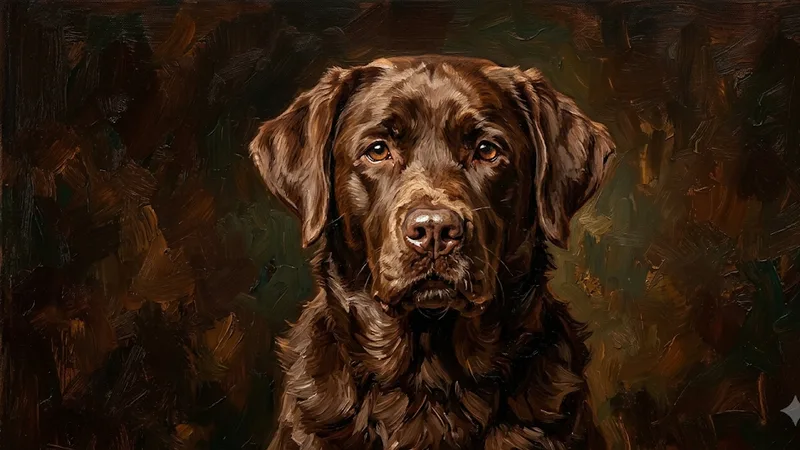
Four things make a portrait read as oil. Brushwork stays visible, so you can see how the paint was laid down. Colors are deep and slightly warm, built up rather than flat. Texture catches light across the surface. And the edges stay firm, unlike watercolor, so the dog holds its shape against the background.
Rich texture. Oil sits on the surface. You can almost feel the paint — thick strokes, raised edges, the sense that a brush pushed pigment around. That physical quality is what separates oil from every flatter style.
Depth and color. Oil colors are deep and saturated, layered so light seems to come from within the image. Shadows go dark and warm, highlights glow. A coat rendered in oil looks dimensional rather than printed.
Visible brushwork. You can see the strokes. Fur is built from directional marks, backgrounds from broad sweeps. That handmade evidence is a big part of why oil feels like real art.
Classical gravitas. Put those together and you get weight and seriousness. Oil is the language of old master portraits, and a dog painted this way inherits some of that dignity. It doesn't feel casual — it feels important.
Why Is Oil the Go-To for Heirloom Portraits?
Because it looks commissioned. For centuries, oil was how families immortalized the people and animals that mattered to them, and that association still holds. An oil painting dog portrait reads as something meant to last and be passed down, not a quick novelty.
The texture does a lot of the work. That handmade surface signals value in a way a flat image never can. Hang one on the wall and it holds its own next to any framed painting in the room.
There's also a formality to it. Where a softer style whispers, oil states. For a dog you want to honor properly — a family dog, a once-in-a-lifetime companion — the seriousness of the medium matches the feeling. It treats the dog as a subject worthy of a real portrait.
Which Dogs and Coats Shine in Oil?
Most of them, but a few types are made for it. The style rewards depth and texture, so dogs with a lot of both come alive.
Rich, dark coats. A black lab, a chocolate brown dog, a deep red setter — oil loves saturated color. The style pulls warmth and dimension out of coats that can look flat in a photo.
Thick or dimensional fur. Breeds with substantial coats — shepherds, huskies, retrievers — give oil's brushwork something to build. Every stroke adds to the sense of real fur you could run a hand through.
Noble or dignified faces. Any dog with a bit of presence suits the medium's formality. A steady, serious expression reads beautifully in oil.
Lighter and short-haired dogs work well too — they lean on color and light rather than heavy texture. There's no coat oil truly fails on, but dark, dimensional dogs are where it's strongest. For a fluffier golden or cream coat, the softer options are worth a look. Our dog portrait styles explained guide lays out every choice side by side.
How Is Oil Different From Watercolor or Realistic?
Oil, watercolor and realistic styles aim at different feelings. Oil is weight and permanence — it looks like something that took months. Watercolor is lightness and softness, and it forgives a weaker photo. Realistic aims at accuracy above all and reads closer to a photograph than a painting. Choose oil when you want the piece to feel commissioned.
Watercolor is soft, light, and forgiving. Bleeding color, open white space, a gentle mood. It's tender where oil is grand. If you want something quiet and emotional rather than weighty, the watercolor dog portraits guide covers that end of the spectrum.
Realistic is faithful and precise — it reproduces your exact dog, every whisker in place, and looks like a very good photograph turned painting. It rewards a sharp source and aims for accuracy over mood.
Oil sits between drama and accuracy. It isn't trying to be photo-exact, and it isn't trying to be gentle. It's trying to impress — to give your dog the treatment a serious painter would. Where watercolor goes soft and realistic sharpens, oil adds weight and texture. Not sure which fits your dog? Our how to choose the right dog portrait style guide walks through the decision.
Does Oil Need a Better Photo Than Watercolor?
Oil does need a better photo than watercolor, because visible brushwork exaggerates whatever detail exists — including the missing kind. Aim for 2000 pixels on the long edge with the eyes sharp and the coat lit from the front or side. A photo that makes a passable watercolor can look muddy in oil.
Show the face and eyes. Oil builds a dog's presence from the eyes and expression. If they're visible and reasonably sharp, the portrait will feel like your dog.
Prefer good, directional light. Soft side light brings out the texture and depth oil thrives on. Flat or very dim lighting gives the style less to work with.
Fill the frame. Crop fairly close on the head and chest so there's plenty of detail for the brushwork to render.
Aim for decent focus. Because oil renders texture and dimension, a sharper source pays off more here than in watercolor. An old or slightly soft photo can still work, but a clear one shines. Our best dog photos for AI portraits guide covers how to give any style the strongest start.
Making Your Oil Painting Dog Portrait
Once you have a photo, the portrait takes minutes. Upload it, choose the oil style, and you have a finished piece with our portrait generator — starting at a $1 trial.
The advantage of doing it yourself is trying variations. You might find one crop or one photo brings out your dog's dignity better than another, or that a warmer background suits their coat. Because each generation takes minutes and costs almost nothing, you can make several and keep the one that feels most like them.
Pricing is simple: a $1 trial to start, then $19.99 a month for unlimited portraits in every style, in HD. Cancel anytime. There are no per-photo fees — once you're in, you can make as many oil versions as you like.
Printing an Oil Portrait on Canvas
An oil dog portrait is good on paper, but it's made for canvas. A few ways people display one:
-
Canvas print. Oil looks its best on textured canvas, which echoes the real medium and makes the brushwork feel physical. Paired with a substantial frame, it reads as a genuine painting. Our printing and framing guide covers sizing and materials.
-
The heirloom piece. A framed oil portrait is the kind of thing that stays on a wall for years and gets handed down. It's the format to reach for when you want something lasting.
-
The gift. For a serious dog lover, a custom oil dog art print of their own dog feels like a real commission — about as personal and impressive as a gift gets.
The Grandest Way to Turn Your Dog Into Art
Oil earns its reputation honestly. It gives a dog depth, texture, and a sense of importance no other style quite matches. For a family dog, an heirloom for the wall, or simply a portrait that looks properly commissioned, nothing else carries the same weight.
If you've got a clear photo, the hard part is done. Make your oil painting dog portrait here and see your dog rendered rich, textured, and grand.
