
Cavalier King Charles Spaniel Portraits
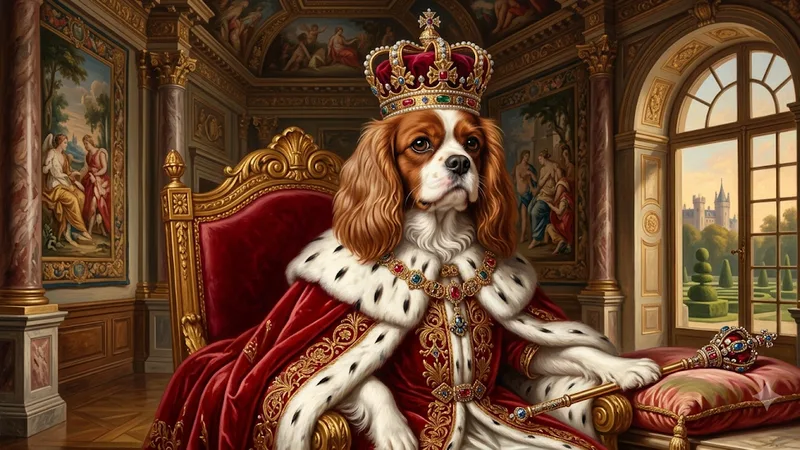
A Cavalier King Charles spaniel portrait works best in royal Renaissance or Victorian style, which suit a breed actually bred for royal courts and flatter the feathered ears. Use soft, even light, catch the eyes sharp, and show the ears in full. One clear photo gives a finished portrait in 1–2 minutes.

Few breeds were as literally born for portraiture as this one. The cavalier king charles spaniel was bred as a companion for royal laps, and its whole look — silky feathered ears, big soulful eyes, a soft gentle expression — reads like something already halfway to a painting. That is why a cavalier king charles spaniel portrait tends to come out looking like real art, not a novelty.
This guide covers the rest: which styles flatter a cavalier specifically, how to photograph those tricky ears and eyes, and how to turn a good phone photo into something worth framing.
Cavalier King Charles Spaniel Portraits at a Glance
A Cavalier King Charles spaniel portrait works best in royal Renaissance or Victorian style, which suit a breed genuinely bred for royal courts. The feathered ears are the thing to get right: they merge into a dark background, so shoot in soft light with the ears spread and clearly lit.
| Portrait detail | What to know |
|---|---|
| Best styles | Royal Renaissance, Victorian |
| Hardest part to photograph | Feathered ears merge into the background |
| Best crop | Head and shoulders, ears spread and lit |
| Time to generate | 1–2 minutes from one photo |
| Print-ready size | 12 × 16 in (30 × 40 cm) at 300 DPI |
What Makes Cavaliers Such Natural Portrait Subjects?
Cavaliers are natural portrait subjects, and their charm is not an accident — the breed was shaped for centuries to sit in laps and look appealing. The eyes are large, dark and low-set, which reads as gentleness in any style. The ears fall in long feathered curtains that frame the face. And the coat carries clear patches of color an artist can build a composition around.
The eyes. Cavaliers have large, round, dark eyes set in a soft face. That gentle, slightly pleading look is the emotional center of any cavalier portrait, and it is exactly what makes a finished piece feel like your dog.
The ears. Long, silky, and feathered, a cavalier's ears frame the face like drapery in a classical painting. They catch light beautifully and give a portrait movement and richness.
The history. The breed is named after King Charles II, who adored the little spaniels and let them roam palace halls. That real royal lineage means a crown or a velvet backdrop looks earned, not ironic.
Put those three together and you have a subject that suits almost any style. Where some breeds only shine in one look, a cavalier can carry regal, soft, or antique with equal ease. The choice becomes about mood rather than about hiding a flaw.
Do The Coat Colors Change The Look?
Yes, and it is worth knowing yours before you pick a style. Cavaliers come in four recognized colors, and each plays differently against a background.
Blenheim — chestnut-and-white, the classic and most common. It glows against dark royal backdrops and warm oil tones.
Tricolor — black, white, and tan. The contrast is striking and reads sharply in almost any style.
Ruby — solid rich red. Ruby coats look luminous in watercolor and oil, where the color can really sing.
Black and tan — deep black with tan points. It has a dignified, formal feel that suits vintage and royal treatments.
If your cavalier is a Blenheim or tricolor, a darker background makes the white markings pop. For ruby and black-and-tan dogs, a mid-toned or warm backdrop keeps the coat from disappearing into the frame. It is a small choice that changes the whole feel of the finished portrait.
Which Styles Flatter A Cavalier Most?
Royal Renaissance and Victorian styles flatter a Cavalier most, because the breed's history sits inside them — a Cavalier in court dress looks at home rather than dressed up. Watercolor suits the softness of the coat. Oil painting renders the feathering as real texture. Here's how the main options land.
Royal / Renaissance
The most natural fit. Given that the breed literally lived in a royal court, dressing a cavalier in ermine and velvet feels less like a costume and more like a homecoming. Those feathered ears and soft eyes carry the regal look effortlessly. Our royal and Renaissance portrait guide goes deeper on the look.
Vintage / Victorian
Cavaliers surged in popularity during the Victorian era, so this style feels historically right. Muted tones, a soft painterly finish, and an antique frame suit the breed's old-world gentleness. Our vintage and Victorian portrait explainer covers when it works best.
Watercolor
Soft, warm, and forgiving. Watercolor suits the cavalier's gentle character and flatters those silky ears, letting the color bleed and feather naturally. It is also kind to a less-than-perfect source photo.
Oil Painting
The richest option. Oil rendering gives depth to a cavalier's coat and warmth to the eyes, making the finished piece look like a serious commissioned work. A great choice if you want one portrait that reads as an heirloom.
For a full side-by-side of every option, see our dog portrait styles guide.
How Do You Photograph A Cavalier Well?
Photographing a Cavalier comes down to the ears and the eyes. Use soft, even light so the feathering keeps its detail instead of merging into shadow, and shoot at the dog's eye level so the ears spread rather than fold back. Focus on the eyes — they are large and dark, and a soft focus there flattens the whole portrait.
Catch the eyes sharp. Focus on the eyes and shoot at the dog's level. A cavalier's soul lives in those big dark eyes, and if they are soft or shadowed, the whole portrait feels flat.
Show off the ears. Photograph the ears hanging naturally and fully, not tucked or windblown. They frame the face, so give them room in the shot.
Use soft, even light. Overcast daylight or open shade is ideal. Harsh sun casts hard shadows under the ears and hides the eyes, while dim rooms make the coat go muddy.
Fill the frame with the dog. Crop close on the head and chest. The more of the frame your cavalier occupies, the more detail there is to work with. Our best photos for AI portraits guide covers this in detail.
Catch a calm moment. Cavaliers are expressive, and a relaxed, alert pose reads better than an excited or panting one. A treat held near the camera often earns you that steady, attentive gaze the breed is known for. Take a few frames and keep the sharpest.
How Do You Make The Portrait?
Once you have a good photo, the portrait itself is quick. Upload the photo, choose a style, and you have a finished piece in minutes with our portrait generator.
Pricing is simple: a $1 trial to start, then $19.99 a month for unlimited portraits, and you can cancel anytime. There are no per-photo packages, which matters here because the real advantage of doing it yourself is trying combinations.
A cavalier looks regal in the royal style, but you might find the watercolor version captures your dog's softness better, or that vintage suits their old-soul face. Because each portrait takes minutes, you can make several and choose, rather than committing to one style the way a commissioned painting forces you to.
Is A Cavalier Portrait A Good Gift?
A Cavalier portrait is one of the safer bets in dog gifting. Cavalier owners tend to be deeply attached to their gentle little companions, and a portrait speaks to that bond directly.
A royal-style cavalier portrait printed on canvas makes a warm keepsake for a birthday or the holidays. For more angles, our pet portrait gift ideas guide has options for every kind of dog person.
It also works as a quiet memorial. Cavaliers hold a huge place in their families, and a soft, dignified portrait is a gentle way to honor one who has passed.
The Companion Bred For The Canvas
Cavaliers earn their reputation as natural portrait dogs. Those feathered ears, those soulful eyes, that royal history — they give you more to work with than almost any other breed, and it shows in the finished piece.
If you have a cavalier and a decent photo, the hard part is already done. Make your cavalier king charles spaniel portrait here — try it in royal and watercolor both, and see which one looks most like the dog you know.
