
How to Choose the Right Dog Portrait Style
Choose a dog portrait style by four things: your dog's personality, the room it will hang in, the occasion, and the quality of your photo. Dignified dogs suit royal and oil; goofy dogs suit cartoon; memorials suit watercolor. A soft photo rules out realistic styles but not painterly ones.

Start with your dog, not the styles. The best dog portrait style is the one that matches your dog's personality, the room it will hang in, and the reason you're making it. Everything else is detail.
That sounds simple, and it mostly is. But staring at a grid of options — royal, watercolor, oil, cartoon — it's easy to freeze. This guide gives you a short framework for how to choose dog portrait style in a minute and feel good about it.
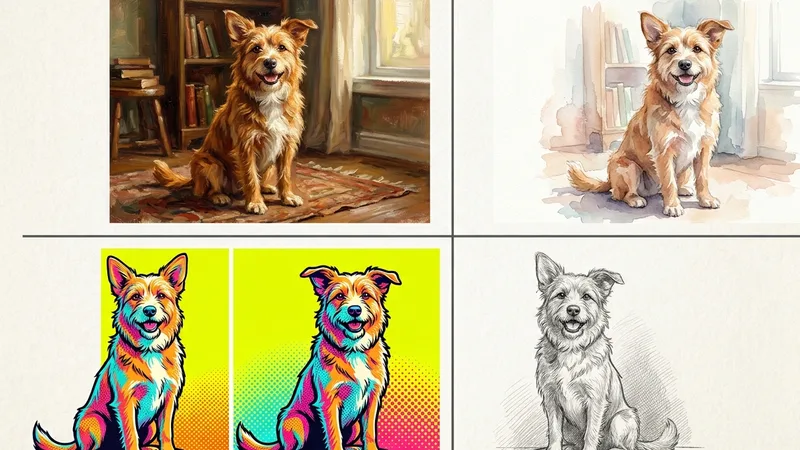
If you want the full catalog first, our dog portrait styles guide walks through every look side by side. Come back here when you're ready to actually pick one.
At a Glance
Choose a dog portrait style by four things: your dog's personality, the room it will hang in, the occasion, and the quality of your photo. Dignified dogs suit royal and oil; goofy dogs suit cartoon; memorials suit watercolor. A soft photo rules out realistic styles but not painterly ones.
| Portrait detail | What to know |
|---|---|
| Match to personality | Dignified dogs suit royal and oil; goofy dogs suit cartoon |
| Match to the room | Ornate for traditional, line art for modern |
| Match to the occasion | Watercolor for memorials, cartoon for birthdays |
| Match to your photo | A soft photo rules out realistic, not painterly |
| Time to generate | 1–2 minutes from one photo |
| Print-ready size | 12 × 16 in (30 × 40 cm) at 300 DPI |
| Try before deciding | 2 or 3 styles from the same photo |
How Do You Choose a Dog Portrait Style?
Here's how to choose dog portrait style in one pass: run your dog through four quick questions. Personality, room, occasion, photo. Each one narrows the field, and by the end you'll usually have a clear winner.
You don't have to be precise about it. The point of this framework isn't a perfect answer — it's to stop you second-guessing and get you to a style that fits.
Does the Style Match Your Dog's Personality?
Personality is the first and most important filter. A portrait that captures your dog's character will always beat a technically fancier one that doesn't.
Bold or regal dogs — the ones who own the room, sit like they're posing, act like royalty — suit a royal or Renaissance treatment. Crown, velvet, the works. See our royal Renaissance portrait guide for that look.
Goofy, playful dogs — tongue out, zoomies, permanent grin — land best in a cartoon or animated style. It leans into the fun instead of fighting it. Our cartoon and Pixar-style guide shows the range.
Gentle or senior dogs suit watercolor. It's soft, warm, and a little sentimental, which fits a calm old soul perfectly. The watercolor portrait guide covers it in depth.
Dignified, serious dogs wear an oil-painting or vintage look well. It reads as timeless and a bit formal — the good boy as an old master.
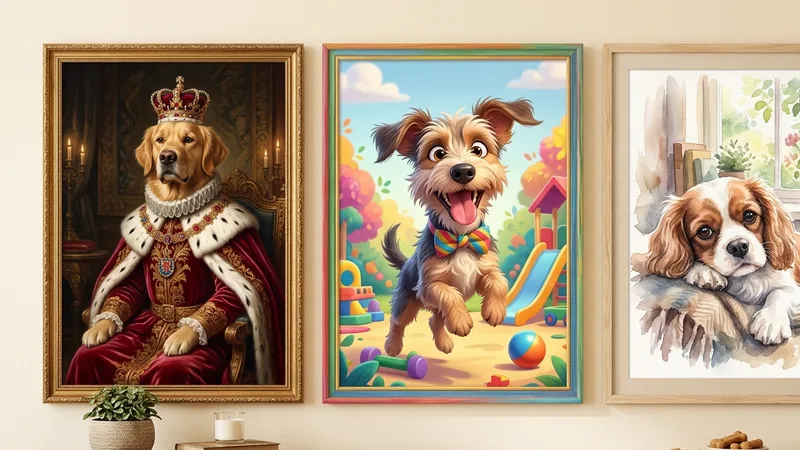
Trust your gut here. You know your dog. If one of those descriptions made you nod, you're most of the way to a decision.
Where Will the Portrait Hang?
The room matters more than people expect. A portrait that fights the decor around it never quite looks right, no matter how good it is on its own.
Think about where it'll live. A formal living room or study suits oil and royal styles — they read as classic wall art. A bright kitchen, kid's room, or playful space suits cartoon and watercolor, which feel light and modern.
Color counts too. Watercolor's soft tones blend into calm, neutral rooms. A dark, dramatic royal background pops against a bold or moody wall. If you already have art up, pick a style that rhymes with it rather than clashing.
What's the Occasion?
The occasion often points straight at the style, because the reason behind a portrait carries its own weight. A memorial wants gentleness, a birthday wants humor, a housewarming wants something that matches the walls. The right look honors that.
A memorial for a dog who has passed suits watercolor or a soft sketch — gentle, tender, never harsh. Our pet memorial portrait guide is written for exactly this moment.
A gift or a bit of fun suits royal or cartoon. Both get a smile, and both make an easy, memorable present that the recipient wasn't expecting.
An heirloom — something you want on the wall for decades — suits oil. It's the style that ages like a real painting rather than a trend.
Will Your Photo Support the Style?
Your photo sets a ceiling on which styles are available. Watercolor, impressionist and cartoon forgive softness, grain and mixed light, because all three convert imperfection into texture. Realistic and oil expose it — every missing detail shows. If your only photo is old or slightly blurred, that decides more than taste does.
Artistic styles — watercolor, cartoon, oil, royal — are forgiving. They reinterpret your dog rather than copy every pixel, so a slightly soft or imperfect photo still turns out great. That's a real advantage if your only good shot is a bit blurry.
A realistic style is the opposite. It rewards a sharp, well-lit, close-up photo and exposes a bad one. If your source is grainy or dim, lean artistic. Our best photos for AI portraits guide shows what a strong source looks like.
So let your photo have a vote. Great photo, any style is open. Rough photo, an artistic style will cover for it.
The Quick Cheat Sheet
The short version, if you want to skip the reasoning: dignified dog and formal room, choose royal or oil. Playful dog or a gift for someone who laughs easily, choose cartoon. Memorial or nursery, choose watercolor. Modern interior, choose line art. Old or soft photo, avoid realistic entirely.
-
If your dog is bold or regal → royal / Renaissance
-
If your dog is goofy and playful → cartoon / animated
-
If your dog is gentle or senior → watercolor
-
If your dog is dignified and serious → oil / vintage
-
If it's a memorial → watercolor or soft sketch
-
If it's a fun gift → royal or cartoon
-
If it's an heirloom for the wall → oil
-
If your photo is soft or imperfect → any artistic style (avoid realistic)
Use it as a starting point, not a rule. The framework points you somewhere sensible; your taste makes the final call.
Still Not Sure? Try Two and Compare
When you're torn between two styles, don't agonize — make both. This is the single best trick for how to choose dog portrait style, and it costs you almost nothing.
Because each portrait takes minutes to generate, you can run your photo through, say, watercolor and oil, put them side by side, and instantly see which one looks more like the dog you know. Seeing beats guessing every time.
That's the real advantage of doing it yourself. A commissioned painter makes you commit up front. Here you can try a few styles in the generator and let the results decide.
Pricing is simple: a $1 trial to start, then $19.99 a month for unlimited portraits, and you can cancel anytime. So comparing three or four styles isn't a splurge — it's just how you find the best one.
Pick a Style, Make the Portrait
Choosing a dog portrait style comes down to four quick questions: who your dog is, where it'll hang, why you're making it, and what your photo can support. Answer those and the right style usually picks itself.
And if two of them tie, that's a good problem — make both. Start your dog portrait here and see which style looks most like your dog.
