
Pug Portraits: Turn Your Pug Into Art
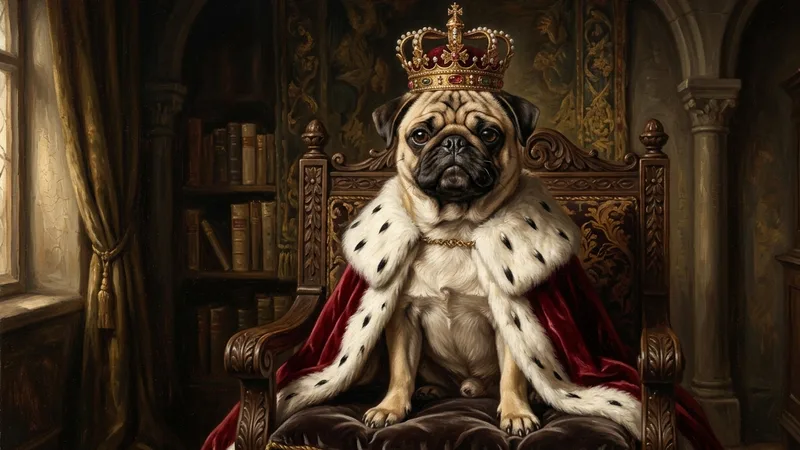
A pug portrait works best in royal Renaissance or oil-painting style, because the contrast between a formal setting and that wrinkled face is the whole joke — and pugs really were bred for royal laps. Shoot front-on at eye level and light the folds. One photo, 1–2 minutes.

Few dogs have a face as instantly readable as a pug's. The deep wrinkles, the flat little nose, those huge dark eyes that seem to hold an entire opinion. A pug looks dignified and ridiculous at the same time, and that tension is exactly what makes a pug portrait so much fun. You get a face built for comedy and a face built for a royal frame, all in one dog.
This guide is about using that. Which styles play to a pug's strengths, how to photograph that tricky flat face, and how to turn a phone snap into art worth framing.
Pug Portraits at a Glance
A pug portrait works best in royal Renaissance or oil-painting style, because the contrast between a formal setting and that wrinkled face is the whole joke — and pugs really were bred for royal laps. Light the folds from the side, or the face flattens. Generating takes 1–2 minutes.
| Portrait detail | What to know |
|---|---|
| Best styles | Royal Renaissance, oil painting |
| Hardest part to photograph | Wrinkles flatten out without side light |
| Best crop | Straight-on, at the dog's eye level |
| Time to generate | 1–2 minutes from one photo |
| Print-ready size | 12 × 16 in (30 × 40 cm) at 300 DPI |
Why Pugs Make Surprisingly Great Portrait Subjects
Pugs are better portrait subjects than they look, and three features explain it. The wrinkles across the brow give an artist real structure to model with light. The eyes are large, round and forward-facing, which reads as earnest in any style. And the flat muzzle makes the whole face a single plane, so it stays sharp across the frame.
The wrinkles. That deeply folded, flat (brachycephalic, meaning short-skulled) face reads as full of character. Every crease catches light and shadow differently, which gives a portrait real texture and depth instead of a flat blob of fur.
The eyes. Big, round, dark, and soulful. A pug's whole expression lives in those eyes, and they are what turn a portrait from "a pug" into your pug. There is a lot of feeling packed into that little face.
The comedy-dignity mix. Pugs carry themselves like small emperors while looking faintly absurd. That combination fits an unusually wide range of styles, from grand and regal to bright and cartoonish.
There is one more thing pugs bring: the tail. That tight little curl is a signature, and a good pug portrait leaves it in the frame when the pose allows. It is a small detail that instantly reads as "pug" to anyone who knows the breed.
Which Styles Flatter a Pug?
Royal Renaissance and oil painting flatter a pug most, because the gap between a dignified setting and that face is the joke the breed carries best — and it is historically fair, since pugs were court dogs in China and later in Europe. Cartoon exaggerates what is already exaggerated. Watercolor softens the wrinkles, which loses the point. Here's how the main options land.
Royal / Renaissance
This is peak pug comedy, and it is glorious. A pug in ermine, velvet, and a jeweled crown is the funniest thing you can hang on a wall, precisely because the pug wears it with total seriousness. The regal pose and the squishy face collide in the best way. If you like the idea, our royal and Renaissance portrait guide goes deeper on the look.
Oil Painting
The most flattering serious option. Oil rendering loves texture, and a pug's face is nothing but texture — folds, whiskers, that velvety muzzle. An oil-style pug portrait catches the light on every wrinkle and looks like a genuine commissioned piece rather than a novelty.
Cartoon / Pixar
Made for those eyes. A pug's oversized, expressive eyes are exactly what cartoon and Pixar-style rendering exaggerate best, turning your dog into a character with real charm. It leans into the comedy and suits a pug's playful personality. See our cartoon and Pixar-style guide for more.
Watercolor
Soft and forgiving. Watercolor suits a pug's gentle side and works especially well for a senior pug or a lighter, more sentimental feel. It also hides a lot in an imperfect source photo, which helps if your best shot is not perfectly sharp.
Realistic
A clean, faithful rendering. For a pug, realistic style rewards a sharp photo by capturing the exact set of the wrinkles and the specific curl of the tail. Best when your source photo is crisp and well-lit.
For a full side-by-side of every style, see our dog portrait styles guide.
How Do You Photograph a Flat Face?
A pug's flat face is the whole challenge. That short muzzle and those deep folds behave differently from a long-nosed dog, so a few things matter more than usual.
Shoot front-on. A pug photographed from the side loses the face entirely — the flat nose disappears and the wrinkles flatten out. Head straight on is where a pug looks most like itself.
Get down to eye level. Shooting from above shrinks the face and hides the eyes. Drop to the floor so the camera meets your pug straight in those big dark eyes.
Light the folds. Soft, even light from the front or slightly to the side gives the wrinkles gentle shadow and shape. Harsh overhead light fills the creases with hard shadow, and flat light erases them completely.
Nail the eyes. Focus on the eyes and make sure they are sharp and catch a little light. A pug's expression is almost entirely in the eyes, and if they go soft the whole portrait feels lifeless.
Fill the frame. Crop close on that head. The more of the frame your pug's face fills, the more wrinkle and detail there is to turn into a portrait. Our best photos for AI portraits guide covers this in more depth.
One more tip for flat-faced dogs: catch your pug calm, not panting. An open, panting mouth can dominate the whole face and pull attention away from the eyes. A closed or relaxed mouth keeps the focus where a pug's character actually lives.
Making Your Pug Portrait
Once you have a good photo, the portrait itself is fast. Upload the photo, pick a style, and you have a finished piece in minutes with our portrait generator — starting at a $1 trial.
The real advantage of doing it yourself is trying combinations. A pug looks hilarious in royal robes, but you might find the oil version captures your dog's dignity better, or that the cartoon style nails those eyes. Because each one takes minutes and costs almost nothing, you can make several and choose, instead of committing to a single style the way a commissioned painting forces you to.
The trial is $1. After that it is $19.99 a month for unlimited portraits, and you can cancel anytime — so making a dozen pugs in a dozen styles costs the same as making one.
Turning It Into Wall Art
Pug portraits are built for the wall, and pug people tend to go all in. A few popular ways owners use them:
-
The royal portrait, framed. Printed and set in an ornate gold frame, a regal pug portrait is a guaranteed conversation piece and looks like it belongs in a tiny palace.
-
The gift. A pug portrait is a reliable gift for the pug obsessive in your life — and pug people are a famously obsessive bunch.
-
The set. Because generating is cheap, many owners make a small gallery wall — the same pug in oil, cartoon, and royal side by side.
Flat-faced breeds all share this photogenic quirk, so if you love the squishy-face look, our French bulldog portrait guide covers the frenchie version of the same idea.
The Funniest, Most Dignified Dog, Made Into Art
Pugs give you more character per square inch than almost any breed. That wrinkled face, those enormous eyes, that unshakeable self-importance — it all shows up in the finished portrait, and it is a joy every time.
If you have a pug and a decent front-on photo, the hard part is already done. Make your pug portrait here — try it in royal and oil both, and see which one your little emperor deserves.
