
German Shepherd Portraits: Turn Your GSD Into Art
A German shepherd portrait works best in a royal or military-aristocrat style, which matches the breed's upright, noble bearing. Light the dark saddle carefully so it does not go muddy, shoot front or three-quarter, and get the eyes sharp. Upload one clear photo and the portrait is ready in a minute or two.

Some dogs look like they are posing before you even lift the camera. The German shepherd is one of them. Ears up, chest forward, eyes fixed on something in the distance — a GSD carries itself with a seriousness most breeds never touch. That built-in dignity is exactly why a german shepherd portrait so often lands as real art instead of a cute keepsake.
This guide is about using that bearing. Which styles suit a shepherd's noble frame, how to photograph a coat that likes to disappear into shadow, and how to turn one good photo into a portrait you'd actually hang.
German Shepherd Portraits at a Glance
| Portrait detail | What to know |
|---|---|
| Best styles | Royal or military aristocrat, oil painting |
| Hardest part to photograph | The dark saddle turns muddy in low light |
| Best crop | Head and chest, front or three-quarter |
| Time to generate | 1–2 minutes from one photo |
| Print-ready size | 12 × 16 in (30 × 40 cm) at 300 DPI |
Why Is a German Shepherd Made for Portraits?
Not every breed gives an artist this much to work with. The shepherd brings three things to the canvas that almost guarantee a strong result.
The posture. A GSD stands and sits with an alert, upright bearing — head high, back straight, weight forward. That noble stance reads as regal without any costume at all. It is the single feature that makes shepherds look commissioned rather than snapshotted.
The coat. The classic tan-and-black saddle pattern gives a rich range of tones, from warm amber on the legs and chest to deep near-black across the back. Handled well, that contrast looks dramatic and dimensional in almost any style.
The face. Shepherds have long, expressive faces with dark almond eyes and those unmistakable upright ears. Expression is what makes a portrait look like your dog and not a generic shepherd, and a GSD gives you plenty of it — the intent gaze, the slight ear tilt, the quiet focus.
Which Styles Suit a German Shepherd?
Every style works on a shepherd, but a few really fit the breed's character. Here is how the main options land.
Royal / Military Aristocrat
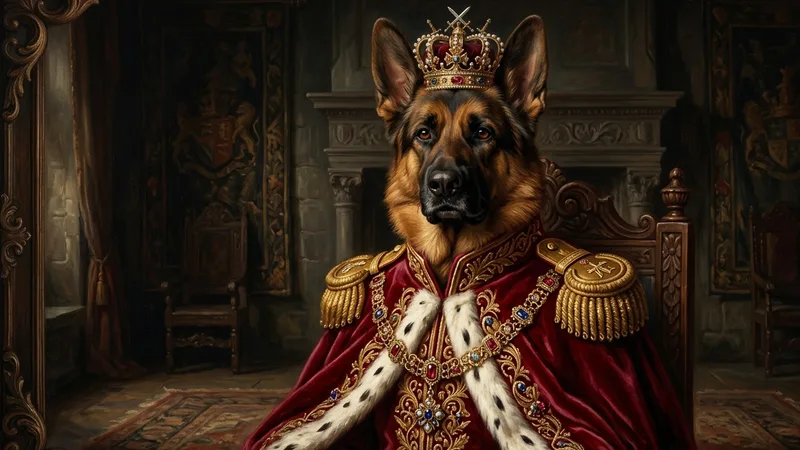
The royal treatment is the match most people don't expect and then can't unsee. A shepherd's proud, upright posture was practically built for the royal and military treatment — epaulettes, a decorated coat, a velvet backdrop.
Where some breeds look like they are playing dress-up, a GSD in full regalia looks like an officer who earned the rank. The posture sells it. If the look appeals to you, our royal and Renaissance portrait guide goes deeper on how it's done.
Oil Painting
A close second. Oil-painting style loves the shepherd's tonal range, giving the tan-and-black coat depth and letting light fall across the fur the way it does on a real dog at golden hour. If you want one piece that reads as a serious commissioned painting, this is it.
Realistic
A clean, faithful rendering. For a shepherd, realistic style rewards a sharp photo with a portrait that captures this exact dog — the precise saddle pattern, the set of the ears, the seriousness in the eyes. Best when your source photo is crisp and well lit.
For a full side-by-side of every option, see our dog portrait styles guide.
How Do You Photograph a German Shepherd's Dark Coat?
Shepherd coats are handsome and a little demanding to shoot. The black saddle can swallow all its detail in low light and turn into a flat, textureless void. A few habits fix that.
Light the dark areas. Aim for soft, even light that reaches the black parts of the coat — overcast daylight or open shade is ideal. In dim rooms the back and saddle go muddy, and you lose the fur texture that makes the portrait feel alive.
Shoot front or three-quarter. A straight-on or slight three-quarter angle shows off the upright ears and that proud chest at once. It's the angle that best captures a shepherd's natural dignity.
Get the eyes sharp. Focus on the eyes. A shepherd's whole expression — the alertness, the intent — lives there, and if they go soft the portrait feels hollow.
Fill the frame. Crop close on the head and chest. The more of the frame your GSD occupies, the more detail there is to turn into a portrait. Our best photos for AI portraits guide and the dog photography tips piece cover the details.
How Do You Make Your German Shepherd Portrait?
Once the photo is right, the portrait is quick. Upload it, choose a style, and you have a finished piece in minutes with our portrait generator — starting at a $1 trial.
After the trial it costs $19.99 a month for unlimited portraits, in HD, with no ads. Cancel anytime.
The real advantage of doing it yourself is trying combinations. A shepherd looks commanding in the military style, but you might find the oil version captures your dog's calm better, or that a plain render is closest to the dog you live with. Because each one takes minutes, you can make several and choose — instead of committing to one style up front the way a commissioned painting forces you to.
Turning It Into Wall Art
A german shepherd portrait is built for the wall. A few ways owners tend to use them.
-
The military portrait, framed. Printed on canvas in a dark, substantial frame, a royal-style shepherd looks like an heirloom that has hung there for a century.
-
The gift. A shepherd portrait makes a reliable gift for the GSD owner in your life — few dog people are as bonded to their breed as shepherd people are.
-
The working-dog tribute. Plenty of shepherds are police, service, or herding dogs, and a portrait is a fitting way to honor a working partner's dignity.
If you love the classic look, it's worth comparing notes with another portrait-ready breed in our golden retriever portraits guide — different dog, same idea.
The Noblest Dog, Made Into Art
Shepherds earn their reputation as one of the great portrait breeds. That upright posture, the tan-and-black coat, the serious and expressive face — they give an artist more to work with than almost any other dog, and it shows in the finished piece.
If you have a GSD and a decent photo, the hard part is already done. Make your german shepherd portrait here — try it in the military style and in oil both, and see which one looks most like the dog you know.
